
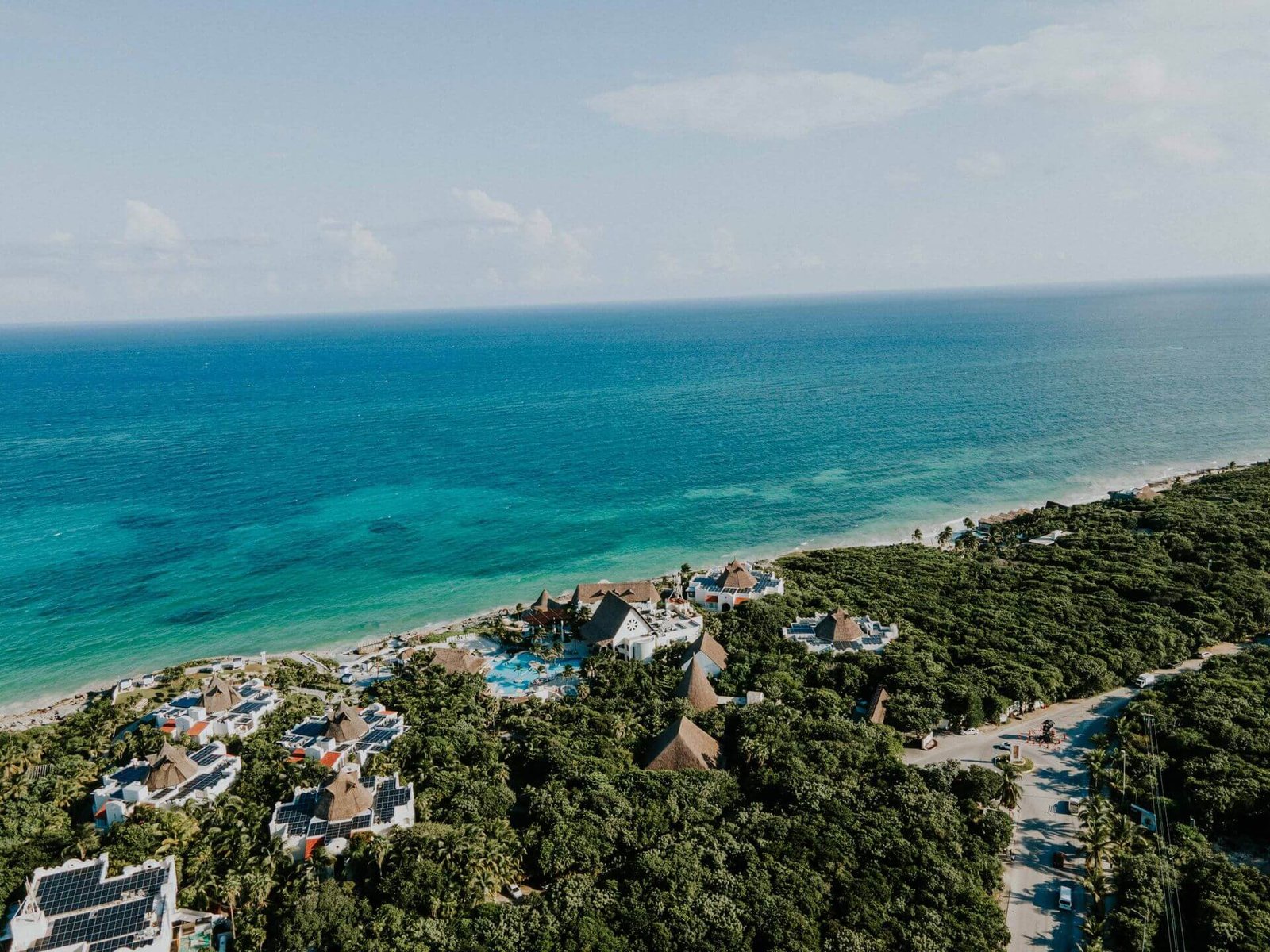
The month you choose to visit Riviera Maya will determine your hotel rate, your cenote wait time, your odds of a weather delay at Cancún Airport, and whether the driver you booked actually shows up. Most travel guides stop at rainfall averages. This one layers in crowd density, school calendars, hurricane probability windows, and the operational reality of running airport transfers 365 days a year across every season the Riviera Maya throws at travelers.
In short: The best time to visit Riviera Maya is December through April, when rainfall is minimal and temperatures stay between 75 and 85°F. Travelers who want fewer crowds and lower prices without high storm risk should target May or late October. July and August are busy but manageable. September carries the highest hurricane probability of any month.
Key Takeaways
- December through April is peak season: best weather, highest prices, and the period when confirmed airport transportation matters most — shared shuttles and informal drivers are most likely to be overbooked or no-shows
- September is the statistical peak of hurricane season in the Caribbean; travelers booking that month should prioritize services with active flight tracking and flexible wait policies
- May and late October offer a practical sweet spot — post-spring-break crowds, pre-peak pricing, and storm probability lower than the June through September core of hurricane season
- Spring break (mid-March through early April) and Christmas week drive the highest demand on every service layer in Riviera Maya, from cenote reservations to airport pickup queues
- Families traveling with children will find child seat availability — standard with some operators, an add-on or unavailable with others — most critical during summer and holiday peaks when family travel dominates
What Factors Influence the Best Time to Visit Riviera Maya?
Weather is the variable most guides lead with, and it matters. But travelers who plan a Riviera Maya trip around rainfall charts alone often arrive to find that the cenote they wanted requires a 90-minute advance reservation, the restaurant they read about has a 3-week wait for weekend tables, and the transfer company they booked at the last minute has overcommitted and isn’t answering the phone.
The real variables are four: weather, crowd density, school calendars, and logistics capacity.
Weather sets the baseline. The dry season runs December through April. The wet season runs June through October, with a brief dry spell in late July and early August sometimes called the “canícula.” Rainfall during wet season tends to arrive in afternoon bursts rather than all-day events, which changes the calculus for travelers willing to plan around it.
Crowd density follows school calendars more than weather. American and Canadian spring break (mid-March through early April), Christmas week, and Semana Santa (Mexican Easter week, which shifts annually but typically falls in late March or April) compress the highest demand into specific 7 to 10 day windows. Cenotes, ferry terminals, and popular restaurants hit capacity during these windows in ways that don’t happen even in the surrounding peak-season weeks.
Logistics capacity is the factor no guide talks about. During Christmas week and spring break, every service layer in the Riviera Maya is running at or above its designed limit. That includes airport transportation. The operators who oversell or understaff during these periods are the ones whose drivers don’t show up after a long international flight. 80 to 90% of Caribe Nut’s business comes from Riviera Maya villas, marinas, and concierge services — operators who manage guest logistics across every season and stake their reputation on every vendor they recommend. That volume creates operational discipline that casual or seasonal operators don’t develop.
When Is Peak Season in Riviera Maya and What to Expect?
Peak season runs December through April. Temperatures stay between 75 and 85°F, humidity drops relative to summer, and the Caribbean water is clear enough to see reef structure from 20 feet up. This is the version of Riviera Maya that photographs are made of, and the prices reflect it.
What travelers don’t always account for is that peak season concentrates demand on every layer of the experience simultaneously. A villa that costs $800 per night in October costs $1,400 in January. Cenotes that allow walk-ins in May require timed-entry reservations in February. And airport arrivals during Christmas week and spring break put real pressure on transportation logistics in ways that expose the gap between operators who plan for it and those who don’t.
For families, peak season also means the highest concentration of other families traveling with children. Child seat availability, which some operators include as standard and others charge extra for or simply don’t carry, becomes a genuine differentiator. Caribe Nut includes up to 2 child seats at no extra charge on every transfer — a detail that matters most when you’re arriving at 11 PM with a 4-year-old after a 5-hour flight.
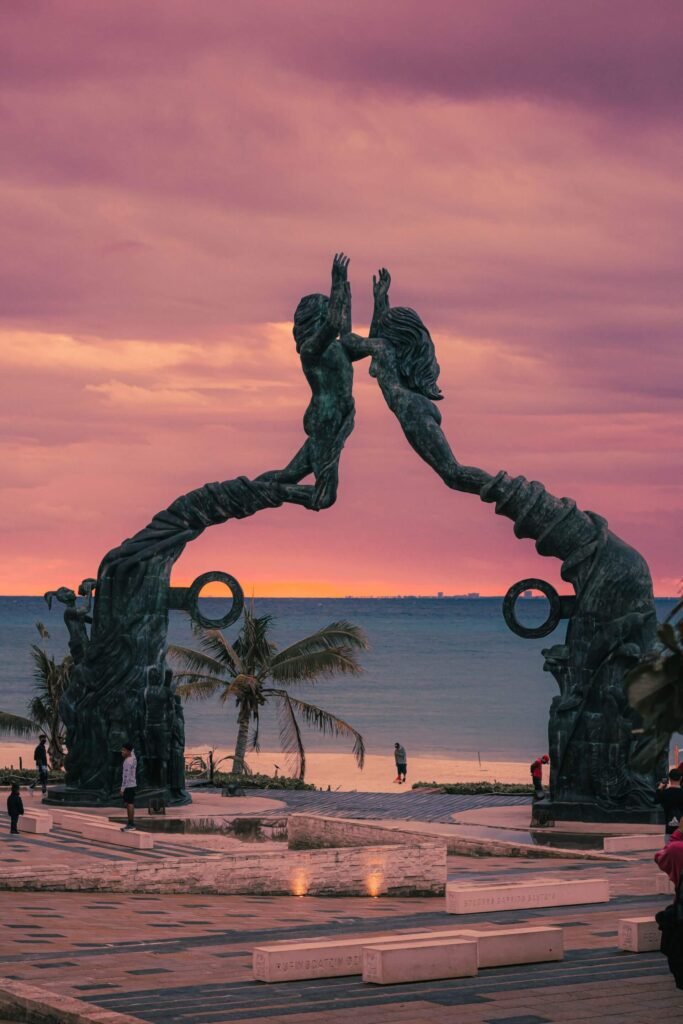
The travelers who feel peak season pressure most acutely are the ones who confirmed their flight and their hotel but left transportation to chance. A private transfer from Cancún to Playa del Carmen booked in advance means a driver with your name on a sign when you clear customs — not a negotiation at the taxi stand while your kids stand on the curb.
How Does Hurricane Season Affect Travel Plans?
Hurricane season in the Atlantic runs June 1 through November 30. In the Riviera Maya, the practical risk is concentrated in a narrower window. August through October carries the highest probability of storm activity, and September is statistically the most active month in the Caribbean basin.
That said, “hurricane season” is not a synonym for “don’t go.” Most storms track north of the Yucatán or weaken before landfall. The more common weather event during this period is a tropical wave — 2 to 3 days of rain and wind that disrupts outdoor activities but doesn’t threaten safety. Travelers who book refundable accommodations and travel insurance can visit June through October with reasonable confidence.
What hurricane season does change is the calculus around flight reliability. Summer storms cause diversions, delays, and cancellations at Cancún Airport with enough frequency that flight tracking isn’t a courtesy — it’s a functional requirement for any airport transfer service operating during these months. Caribe Nut tracks every flight actively and holds 1 hour and 10 minutes of complimentary wait time on every transfer. If a storm-related delay pushes an arrival back, the driver adjusts. That buffer was designed specifically for the unpredictability of summer travel in a tropical climate.
September offers the lowest prices of the year and the emptiest cenotes, but it carries the highest storm risk. Travelers who go in September should choose services built around flexibility, not services that assume everything runs on schedule.
What Are the Best Months for Fewer Crowds and Lower Prices?
Two windows stand out for travelers who want to optimize value without taking on meaningful storm risk.
May sits between spring break’s departure and the onset of peak hurricane activity. School is still in session across most of the United States and Canada through late May, which keeps family travel volume lower than summer. Prices drop 20 to 35% from peak season rates at most properties. Cenotes are accessible without advance reservations on most days. The weather is warm — temperatures reach 88 to 92°F — and afternoon rain is possible but not the defining feature of the month.
Late October (roughly October 20 through November 10) offers a similar dynamic on the back end of hurricane season. Storm probability drops sharply after mid-October. Crowds haven’t yet built toward the Christmas rush. Prices reflect the shoulder positioning. The water temperature is at its annual peak, which makes it the best month of the year for snorkeling and diving. Travelers who have flexibility in their schedule and want a private cenote experience without the weekend crowds will find late October consistently delivers it.
November is underrated across the board. Dia de los Muertos (November 1 and 2) brings cultural programming to Playa del Carmen and Tulum that most tourists never see. Weather is stable. Prices are low. Airport arrivals in November are among the smoothest of the year from a logistics standpoint.
What Local Events Should Travelers Consider?
Local events in the Riviera Maya range from cultural observances that add genuine depth to a trip to music festivals that dramatically increase crowd density with little upside for travelers not attending. Knowing which is which helps.
- Semana Santa (March or April, date shifts annually): Mexican Easter week is the busiest domestic travel period of the year. Beaches, cenotes, and highways between Cancún and Tulum are at maximum capacity. Airport arrivals during Semana Santa require confirmed transportation — informal operators and shared shuttles are stretched thin.
- Dia de los Muertos (November 1–2): Playa del Carmen’s 5th Avenue hosts processions, altars, and street performances that are worth planning around rather than avoiding. Crowds are manageable and concentrated in specific areas.
- BPM Festival (historically January, Playa del Carmen): An electronic music festival that fills hotels in Playa del Carmen and raises accommodation prices for its run. Travelers not attending will find the area louder and more congested than typical January.
- Riviera Maya Jazz Festival (November, Playa del Carmen): Free outdoor concerts that draw a mix of international and local audiences. Low disruption to non-attendees, culturally interesting for those who want to attend.
- Christmas week (December 23 through January 2): Not a single event but the highest-demand period of the year. Every service — from restaurant reservations to airport pickups — should be confirmed before departure.
- Spring Break (mid-March through early April): American and Canadian university schedules vary, which stretches this window across nearly three weeks. Tulum and Playa del Carmen both see significant increases in younger travelers during this period.
Month-by-Month Breakdown of Riviera Maya Conditions
| Month | Avg. Temp (°F) | Rainfall Level | Crowd Density | Hurricane Risk | Relative Pricing |
|---|---|---|---|---|---|
| January | 75–82 | Low | High | None | High |
| February | 75–83 | Low | High | None | High |
| March | 77–85 | Low | Very High* | None | Very High |
| April | 78–87 | Low–Moderate | High | None | High |
| May | 82–90 | Moderate | Low–Moderate | Minimal | Moderate |
| June | 84–91 | Moderate–High | Moderate | Low | Moderate–Low |
| July | 84–91 | Moderate | High** | Low–Moderate | Moderate |
| August | 84–92 | Moderate–High | High** | Moderate | Moderate |
| September | 83–91 | High | Low | High | Lowest |
| October | 80–89 | Moderate (drops late) | Low | Low–Moderate | Low |
| November | 77–85 | Low | Low | Minimal | Low |
| December | 75–83 | Low | Very High* | None | Very High |
*Spring break and Christmas week drive density spikes within these months.
**July and August crowds are primarily domestic Mexican travelers and European visitors; American family travel peaks during these weeks as well.
How Can Travelers Ensure a Smooth Arrival?
The moment most Riviera Maya trips go wrong is not at the hotel or the cenote. It’s in the first 45 minutes after landing at Cancún Airport — customs lines that run longer than expected, baggage delays, and then the discovery that the transfer booked through a third-party aggregator has no driver waiting and no one answering the phone.
The travelers who avoid this consistently are the ones who treat airport transportation the same way they treat their flight confirmation: something that needs to be locked in before departure, not figured out on arrival.
A few specifics that matter regardless of which season you’re traveling in:
- Confirm flight tracking is included. A driver who doesn’t know your flight is delayed will leave. A driver with active flight tracking adjusts automatically. This matters in December when holiday air traffic creates cascading delays, and it matters in August when a tropical system can push your arrival back by 3 hours.
- Verify the vehicle is private. “Private transfer” is used loosely by aggregators who route bookings to shared shuttles. Ask explicitly: will there be other passengers in the vehicle? Will there be stops at other hotels before mine?
- Confirm child seats in writing before departure. During spring break and Christmas, families with young children represent the majority of incoming bookings. Operators who don’t carry child seats will tell you this after you’ve landed, not before.
- Book directly when possible. Every layer of intermediary between you and the driver creates a potential communication gap. Booking directly with the operator means one point of contact who knows your name, your flight number, and your destination.
Caribe Nut includes 1 hour and 10 minutes of complimentary wait time, active flight tracking, and up to 2 child seats on every transfer — details that exist because the service was built around what actually happens on travel days, not the ideal scenario.
Ready to simplify your arrival?
Book your verified driver now and start your vacation stress-free.
Frequently Asked Questions
What local events or festivals happen in Riviera Maya throughout the year?
When do most Americans visit Riviera Maya?
Is it safe to travel to Riviera Maya during rainy season?
What is the weather like in Riviera Maya in December?
When is the cheapest time to visit Riviera Maya?
Is Riviera Maya crowded in July and August?
What is hurricane season in Riviera Maya and should I avoid it?
What is the best month to visit Riviera Maya?
The Riviera Maya delivers a different trip depending on which week you land at Cancún Airport. The weather variable is the easiest to plan around. The harder variables — crowd density at cenotes, logistics capacity during Christmas week, hurricane probability in September, the gap between operators who track flights and those who don’t — require a more specific kind of planning.
Whichever month you choose, the first decision that matters is the one you make before you land: whether the driver waiting for you at arrivals is confirmed, tracked, and ready to adjust if your flight isn’t. Everything else about the vacation follows from there.
Secure your ride today!
Don’t leave your airport transfer to chance. Book your exclusive vehicle now and ensure a smooth start to your Riviera Maya adventure.
Tu paraíso comienza aquí: 15% off en traslados en Cancún.
15% de descuento reservando tu viaje redondo Aeropuerto Cancún- Hotel – Aeropuerto Cancun