
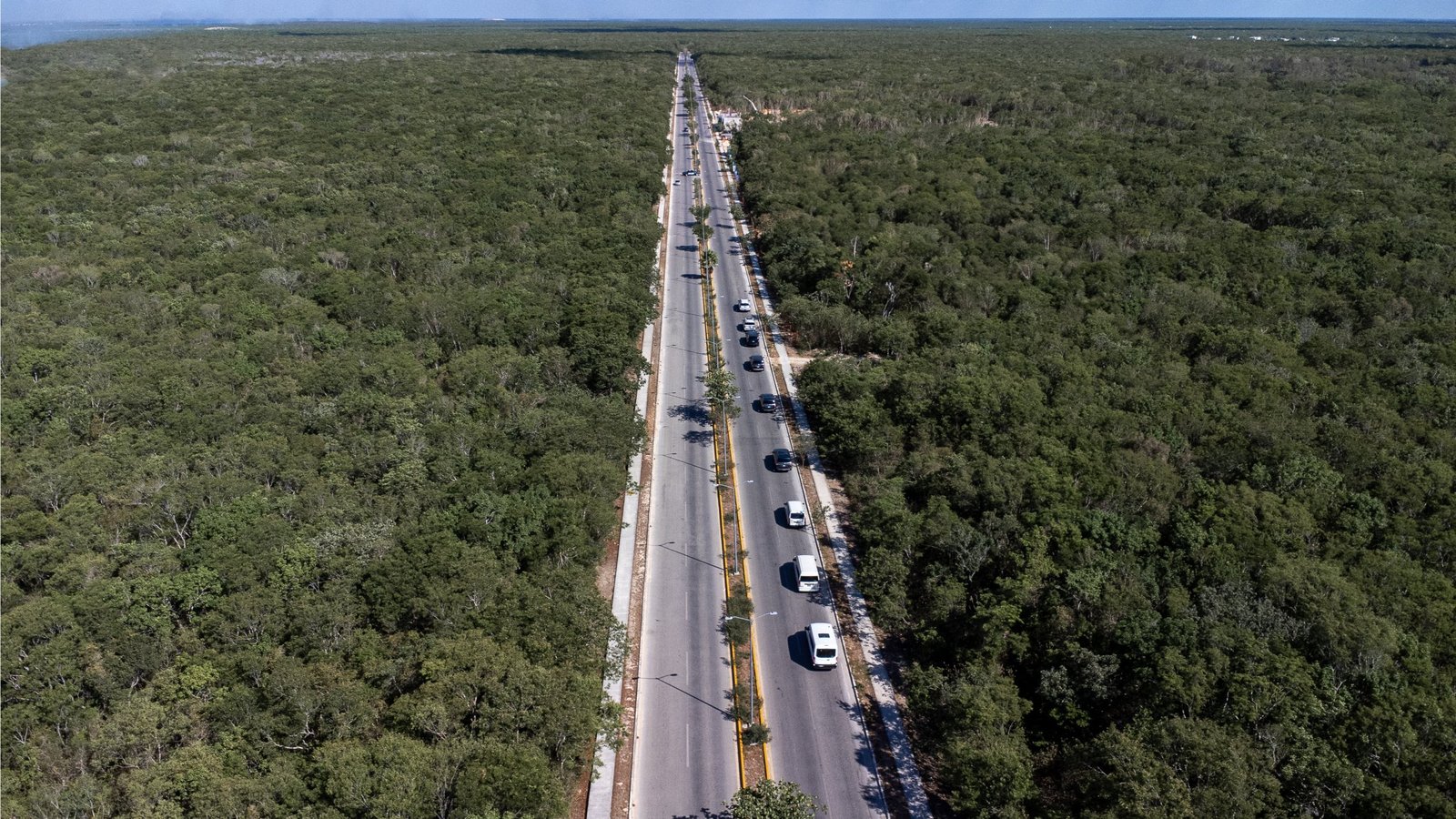
A good Riviera Maya itinerary is built around drive time, not attraction lists. Highway 307 links Cancun, Playa del Carmen, and Tulum, but the trip takes longer than the map suggests once you factor in speed bumps, checkpoints, and the 4:00-6:00 p.m. rush when day-trippers and workers all head home at once. Plan your route around those windows and a one-day loop actually works.
In short: Cancun to Tulum covers about 130 km and takes roughly 2 hours by car under normal conditions, longer with construction or traffic. The safest one-day itinerary picks one direction on the coast, leaves before 9 a.m. or after the lunch rush, and treats the 4-6 p.m. window as off-limits for driving back north.
Key Takeaways
- Highway 307 runs the length of the coast, but a Cancun-to-Tulum drive still takes about 2 hours, and that number grows fast with roadwork, topes, and checkpoints.
- The 4:00-6:00 p.m. stretch is the worst time to be on the road anywhere between Playa del Carmen and Cancun, whether you're driving or catching a ferry back from Cozumel.
- Tulum ruins open at 8 a.m. and there's no parking at the site itself, so early arrival buys you both a shorter walk and a shorter line.
- One-directional routing beats zig-zagging. Pick a corridor (Cancun-Playa or Playa-Tulum) instead of doubling back across the same stretch of highway twice in one day.
- A private driver removes the two biggest time losses on a self-drive day: missed turns and the drive back from a car rental office after everyone else is ready for the pool.
Why does a Riviera Maya day trip always take longer than the map says?
Highway 307 stretches about 380 km along the coast from Cancun to Chetumal, and most of it is a well-maintained, mostly divided road with a posted limit around 110 km/h. On paper that sounds fast. In practice, the Cancun airport to Tulum stretch, about 118-130 km, runs closer to 1 hour 40 minutes to 2 hours by private vehicle, and that estimate assumes clear conditions.
Three things eat into that number every time:
Topes (speed bumps). They show up without much warning near towns and resort entrances, and hitting one at speed is the fastest way to add a repair bill to your vacation.
Checkpoints. Police and National Guard checkpoints appear periodically along the corridor, especially between Cancun-Playa del Carmen and Playa del Carmen-Tulum. Most are routine and add only a couple of minutes, but they're not something a GPS estimate accounts for.
Roadwork. Highway 307 sees constant maintenance sections, and any active construction zone can turn a two-lane stretch into a single-lane crawl with no warning on your map app.
None of this makes the drive dangerous. It just makes a "2-hour drive" more realistically a "2-to-2.5-hour drive," and a day planned to the minute falls apart on the first tope you didn't expect.
What time should you leave to beat the worst traffic?
The single worst window on the whole coast is 4:00-6:00 p.m., when day-trippers, tour buses, and locals finishing work all converge on the same stretch of highway and the same ferry terminal. This isn't unique to drivers. Cozumel ferry data shows the same pattern: morning boats run calmer, with shorter lines and cooler waiting conditions, while the 4-6 p.m. return crossing to Playa del Carmen is the busiest sailing of the day.
The practical rule for a Riviera Maya day: treat 4-6 p.m. as a "don't be on the road" window in either direction. Structure your day so you're either already at your destination or already heading home before it starts.
Two departure windows work well for most itineraries:
- Before 9 a.m. Traffic is lightest, ruins and cenotes are least crowded, and you avoid both the midday heat and the lunch-hour stop-and-go near Playa del Carmen's main intersections.
- After 2 p.m., heading south only. If your plan is Cancun to Tulum for dinner, an early-afternoon departure keeps you ahead of the northbound rush.
How do you build a day that doesn't waste hours in the car?
The biggest itinerary mistake isn't picking the wrong stops. It's picking stops in the wrong order. A day that bounces from Tulum to Playa del Carmen to a cenote near Akumal and back to Cancun covers the same highway three or four times, and every one of those passes risks hitting the 4-6 p.m. window somewhere.
Build the day around one corridor instead:
- Pick a direction, not a destination list. Cancun-to-Playa and Playa-to-Tulum are different corridors with different drive times. Combining stops within one corridor keeps you moving one way, not back and forth.
- Front-load the farthest stop. If Tulum ruins are on the list, go there first, while the site is calm and the light is good, then work your way back toward the hotel zone as the day gets hotter and busier.
- Build in a buffer, not a schedule. A day planned back-to-back with no slack collapses the moment one checkpoint or one tope-heavy stretch runs long. Leave 30-45 minutes of unstructured time between major stops.
- Group by drive time, not by map distance. Two stops that look close on a map can be 40 minutes apart once you account for turning restrictions on the highway, where left turns aren't allowed except at dedicated resort lanes, so a "quick detour" often means driving past your turn and circling back.
Is it faster to drive yourself, or book a private transfer?
Both get you there. The difference is what happens to your day around the drive.
| Self-drive (rental) | Private transfer | |
|---|---|---|
| Cancun airport to Tulum | ~1h40-2h, plus rental pickup and paperwork | ~1h40-2h, door to door |
| Route knowledge | You're learning turn restrictions and tope locations in real time | Driver already knows the checkpoints, construction zones, and shortcuts |
| Flexibility mid-day | Full control, but you're the one navigating between every stop | Point-to-point without needing to find parking at each stop |
| Downtime for the group | Nobody rests; the driver in your group is working the whole trip | Everyone in the vehicle can actually relax between stops |
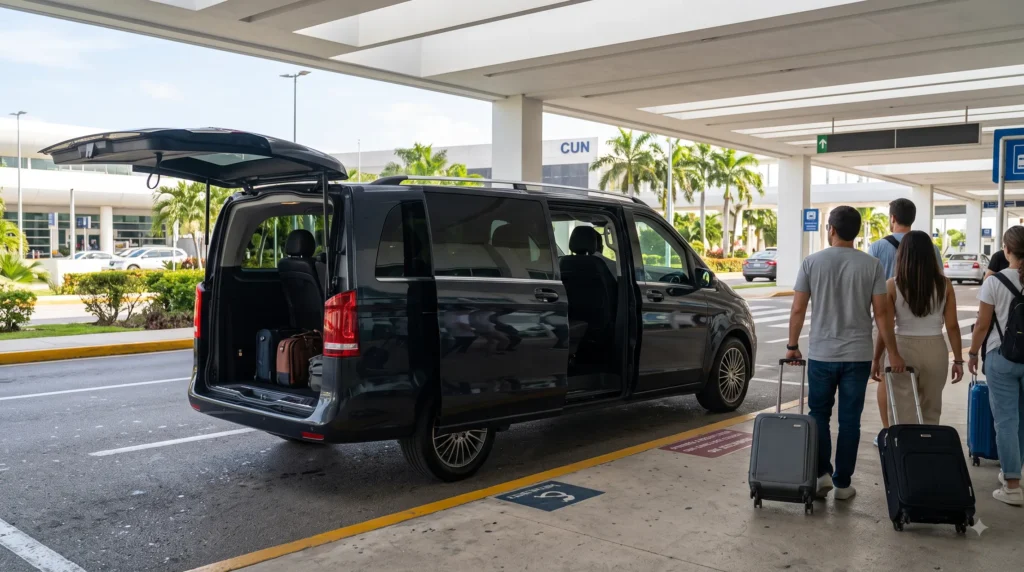
For a single point-to-point trip, self-driving is fine if someone in the group is comfortable with Mexican highway driving and you build in the buffers above. For a multi-stop day, or for a group that wants a driver who already knows this stretch of Highway 307, Caribe Nut's private transportation service runs exclusive, non-shared vehicles across the whole corridor, from Cancun airport transfers to full custom tour days, with a published wait time built in on arrivals and cold drinks and WiFi on board so the ride itself isn't dead time.
What's the smartest way to time Tulum ruins, cenotes, and a Cozumel day into one visit?
Each of these has its own clock, and stacking them without checking those clocks is where most itineraries fall apart.



Tulum ruins: Open daily 8 a.m. to 5 p.m. There's no parking at the archaeological site itself, only private lots near the highway entrance, roughly 150-250 MXN for the day, cash only, plus a short walk or paid shuttle to the gate. Arriving right at 8 a.m. gets you a closer parking spot, a shorter walk, cooler temperatures, and smaller crowds before tour buses arrive. During peak season (December-April), even that early window gets busier, so shoulder-season travelers get the most breathing room.
Cenotes: Best visited either right after the ruins, while you're still in the Tulum corridor, or as a standalone morning before the midday heat peaks. Bundling a cenote onto the same corridor as the ruins avoids a second pass down the highway.
Cozumel by ferry: If a day trip to Cozumel is on the list, take an early crossing. Morning boats mean calmer seas and shorter lines at the pier, and you sidestep the 4-6 p.m. return crush entirely by heading back before mid-afternoon.
The pattern across all three: earlier wins. Every one of these stops rewards arriving before the day gets crowded, and every one of them gets harder to enjoy once you're racing the evening traffic window on top of it.